Catalyst Development
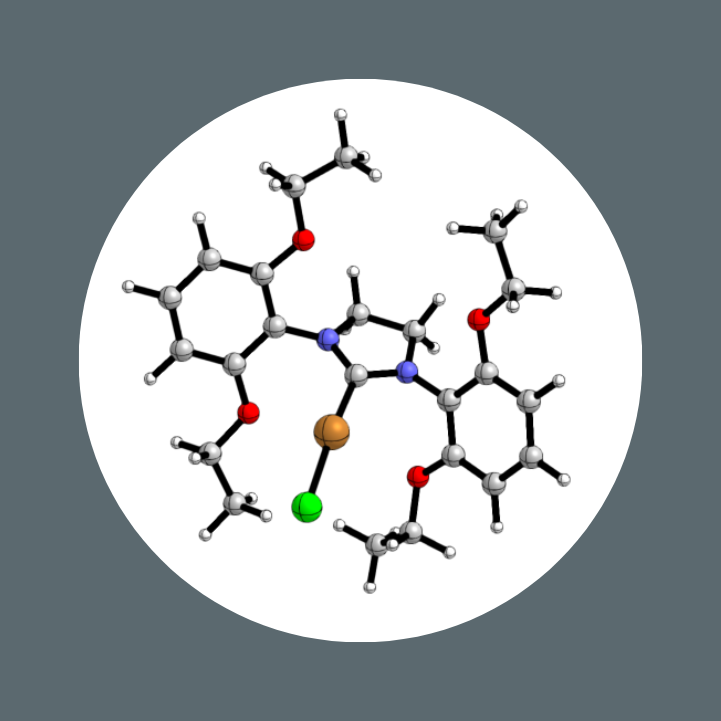
Our group is interested in the design and development of new N-heterocyclic carbenes (NHCs) and secondary phosphine oxides (SPOs). The design of these ligands is guided using computational (DFT) methods to facilitate key steps in catalytic pathways such as oxidative addition. Our group focuses on palladium and nickel catalysts which are air and moisture stable and suitable for broad applications.
Synthetic Methodology
An active area of research in our group is the development of reactions catalyzed by homogeneous transition metal complexes. By altering the structure of the catalyst, and developing new substrates, operationally robust, and user-friendly methodology can be developed and new reactivity can be uncovered. Our methods contribute by reducing chemical waste, and improving the environmental impact of reactions of interest to various industries.
Fluorescent Materials
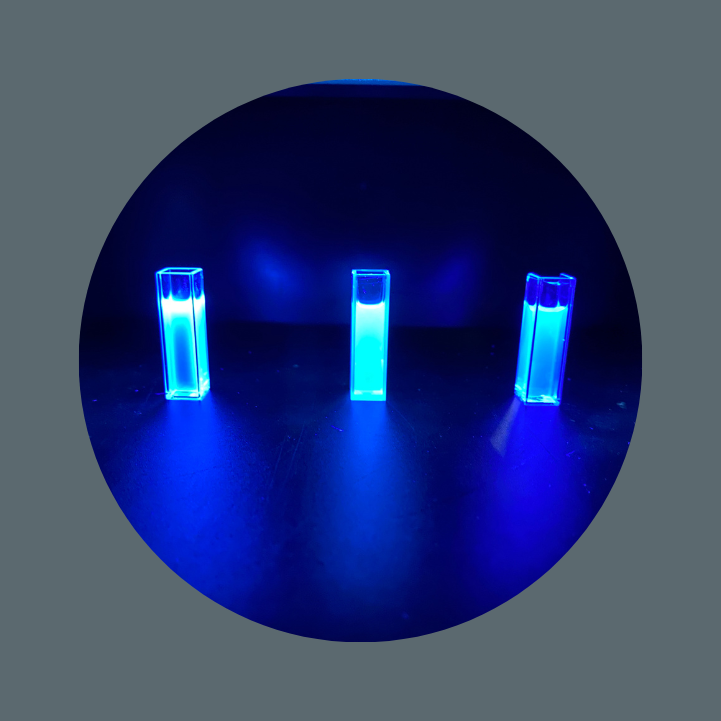
We design new tailor-made molecules featuring conjugated structures which display thermally activated delayed fluorescence (TADF). DFT methods are used to help predict and optimize structures for improved emission properties. In collaboration with other research groups, these fluorescent molecules are incorporated into sensors for materials applications.
Elucidation of Mechanisms
Using computational and experimental methods such as in-situ reaction monitoring, we study the mechanism of transition metal-catalyzed reactions. Our group is primarily focused on reactions involving the construction of carbon-carbon bonds.

 Keske Research Group